
CLARITY Act Ethics Provision: The House Made One Amendment in Order Out of Fifty-One
The CLARITY Act ethics provision was proposed seven times in the House. One amendment out of fifty-one was made in order, and the Senate now holds the question.
The Bright Recap
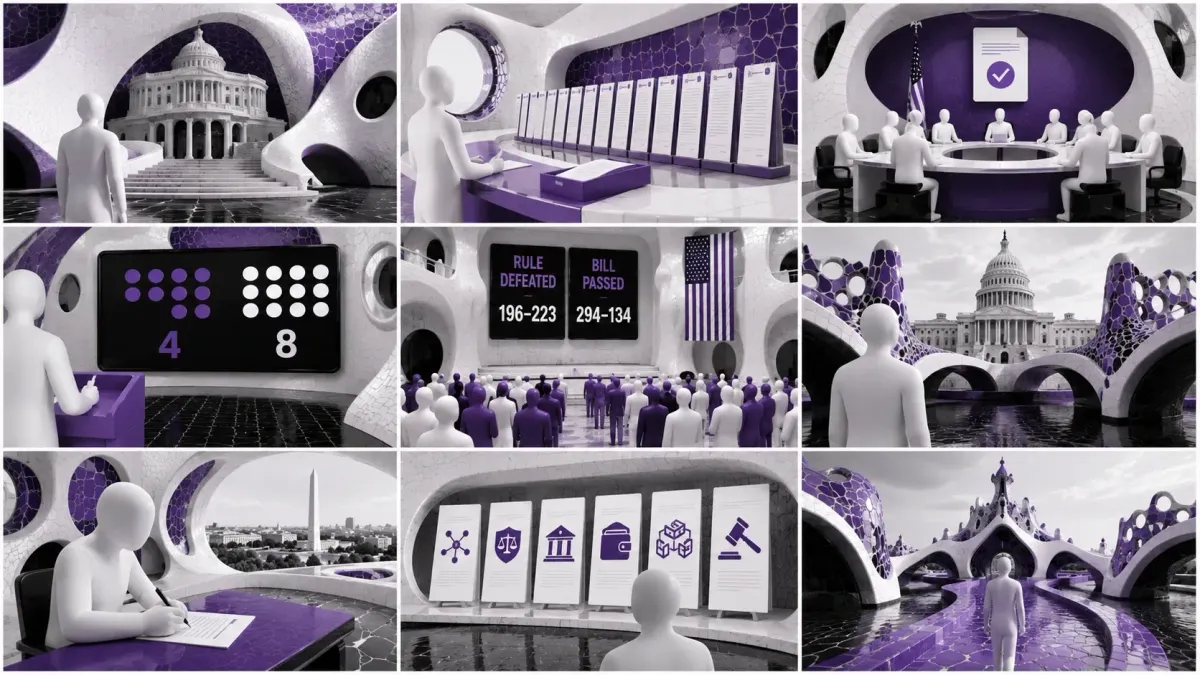
Fifty-one amendments were submitted to H.R. 3633 in the House Rules Committee in July 2025. Seven of them would have restricted public officials from profiting from digital assets. One amendment out of the fifty-one was made in order, and it concerned securities regulation.
To know more about this topic, read our related articles:
- The committee vote and its caveats
- Every fight that got it here
- When a bill becomes symbolism
- The argument that never changed
- Two unrelated reasons for delay
- Criminal liability for writing code
- The retirement risk unions raised
- Where the Senate drew its line
- A bank chief against his own bank
- Blockchain explained
- Financial technology explained
Bright Answers
What is the CLARITY Act ethics provision?
Language that would stop the President, Vice President, members of Congress, senior officials and their families from profiting from digital assets while holding office. The bill contains no such language. Seven amendments proposing versions of it were filed in the House and none was made in order.
Has the Senate voted on the CLARITY Act?
No. The congressional record shows the bill reported by the Senate Banking Committee on 1 June 2026, with no Senate floor action recorded since.
Why does the ethics question decide the bill?
Ending debate in the Senate takes 60 votes and the majority holds 53 seats. Democratic votes are needed, and senators holding them have named enforceable ethics language as their condition.
Procedure defers questions that politics cannot answer, and deferred questions come back carrying more weight. The CLARITY Act ethics provision that now decides whether crypto market structure legislation clears the Senate was put to the House seven times in July 2025, drew exactly one recorded vote, and was closed off by a rule that admitted a single amendment out of fifty-one. Twelve months later the same language is the condition several Democratic senators have set for their votes. The record of what the House agreed to consider explains the Senate's position more clearly than any account of the current negotiation.
What the House record contains
Representatives filed fifty-one amendments to H.R. 3633 before the Rules Committee met on 14 July 2025. Seven would have restricted office-holders and their families from profiting from digital assets, sponsored by Tlaib, Lynch, Neguse, Adams, Waters, Liccardo and Vindman.
They covered an annual inspector general report on presidential holdings, a bar on government transactions requiring assets tied to the President's family, an ownership prohibition reaching family members, a ban on officials' assets trading on registered venues, a restriction on registered firms handling meme assets tied to officials with a financial interest, and the package Waters titled the Stop TRUMP in Crypto Act. Readers who followed every fight that preceded the committee stage know the arguments; the procedural record shows how few reached a vote.
One amendment in order
The Rules Committee record shows a structured rule admitting one substantive amendment, from Representative Sherman, which preserved the Securities and Exchange Commission's authority over shares and debt instruments issued on a distributed ledger. A manager's amendment of technical corrections from Thompson and Hill was treated as adopted. The other forty-nine were submitted, revised, withdrawn or left where they were. Members who wanted the ethics question settled had one route remaining, which was to move that their amendment be made in order.
The vote that happened
Representative Neguse moved on his own amendment, which would have stopped sitting members of Congress, presidents and vice presidents, and anyone campaigning for those offices, from launching a digital asset or lending their name to one, with existing holdings placed beyond their control in a blind trust. Record Vote No. 152 defeated the motion 4–8. All eight Republicans present voted against and all four Democrats voted in favour. A parallel motion on the Waters consumer package, which would have required custody arrangements able to survive an insolvency, withdrawals inside a day, audited reserve attestations and additional funding for both regulators, failed by the same margin as Record Vote No. 151.
The rule itself then failed on the House floor by 196–223 on 15 July 2025 before being agreed the next day at 217–212. The bill passed on 17 July 2025 by 294–134, and the ethics question travelled to the Senate untouched. The committee vote count in the Senate told the same story from the other end, with two Democratic votes and a list of reservations attached to them.
The same question, twelve months later
Senator Elizabeth Warren, ranking member of the Senate Banking Committee, wrote to Senate leaders on 13 July 2026 setting a condition for any text reaching the floor. Her position is that earnings from the sector this bill would govern should be walled off from everyone holding federal office and from their families, reaching from the presidency through senior appointees and into Congress. The committee's release records that the President's annual disclosure for 2025, published on 30 June 2026, showed around $1.4 billion in cryptocurrency income, more than twice his total income the previous year. The conduct Warren describes and the conduct Neguse proposed to restrict are the same conduct.
What else crossed over unresolved
The same table shows the ethics amendments were not alone. Proposals to strike the sections exempting certain decentralised finance activity from oversight, to preserve state fraud actions against federal preemption, to hold wallet hosts to the anti-money-laundering standards banks meet, to set minimum integrity conditions for records held on blockchain systems, and to create explicit sanctions authority over smart contracts all sat in the same column, submitted and undisturbed. Each of those disputes has since reappeared in Senate negotiations. The House disposed of the procedure without disposing of the arguments.
Why the sequence matters outside crypto
Reorganising regulatory jurisdiction over a market touches anyone whose savings, pension or employer sits near it, which makes this a financial technology question as much as a crypto one. Fintech firms have been building compliance programmes against a framework that has been one procedural step from law since September 2025. The congressional record dates every step and shows where each unresolved item entered the pipeline. Reading it is a faster route to understanding the delay than following the daily count of who might vote which way.
The arithmetic the record produces
Ending debate in the Senate takes sixty votes and the majority holds fifty-three seats, which makes Democratic votes a structural requirement of passage. The senators who hold them have named a condition the House declined to put to a vote on 14 July 2025. Congressional records show the bill reported by Senator Scott on 1 June 2026, with nothing recorded on the Senate floor since.
A rule that makes one amendment in order out of fifty-one relocates the other fifty to whichever chamber has the least room to ignore them, and the Senate has spent twelve months demonstrating where they went.
Editor's note
Every piece published on The Bright Minded goes through careful verification, but mistakes can happen. If you spot an error, have additional information, or want to flag anything, write to rosalia@thebrightminded.com.