Trump Delays the CBDC Ban for a Vote His Own Senate Already Rejected
Trump is withholding his signature on the CBDC ban until the SAVE Act passes, a bill the Senate already rejected 48-50, squeezing the CLARITY Act's calendar.
The Bright Recap
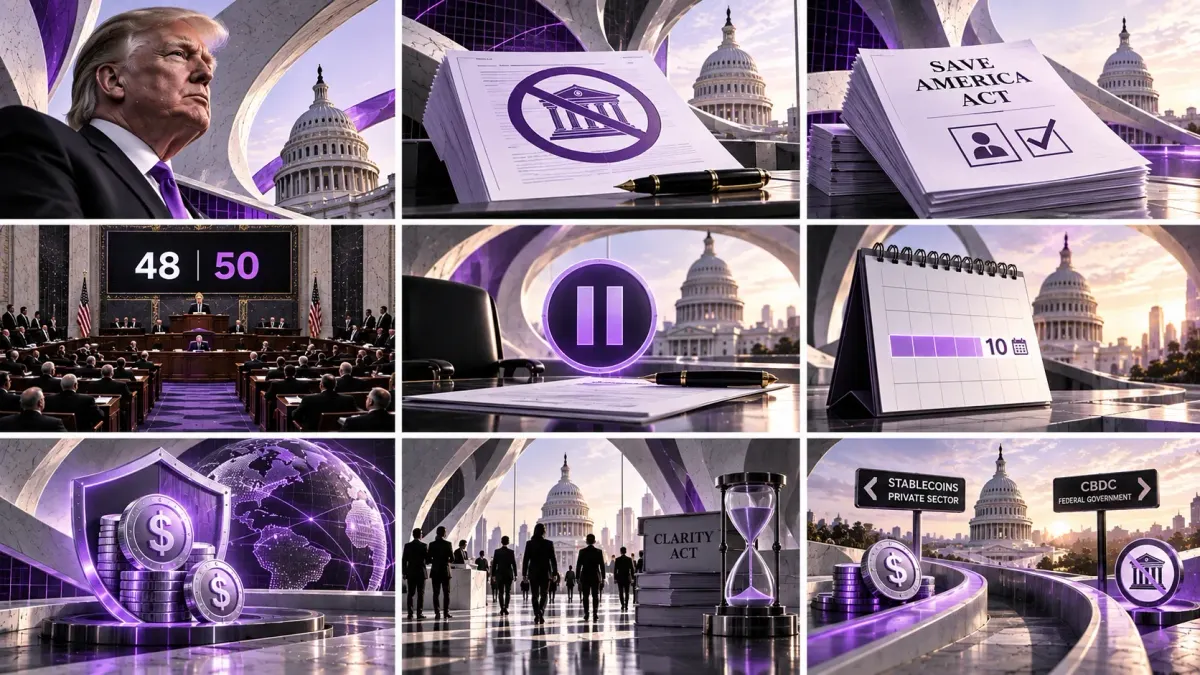
Trump cancelled the signing ceremony for the 21st Century ROAD to Housing Act, which carries a four-year ban on a Federal Reserve CBDC, saying he will not sign it until Congress passes the SAVE America Act. The housing bill passed both chambers by veto-proof margins, while the SAVE Act's core provisions already failed a Senate vote 48-50 in early June, with four Republicans joining every Democrat to block it.
The delay does not change whether the CBDC ban becomes law, since an unsigned bill takes effect automatically after ten days if Congress stays in session. What it spends is Senate floor time, the same resource the CLARITY Act needs before the August recess to have any chance of passing in 2026.
To know more about this topic, read our related articles:
- America's digital dollar ban
- CBDC Ban Through 2030 Comes With an Explicit Stablecoin Shield
- The CLARITY Act's odds
- Financial technology explained
Bright Answers
Why hasn't Trump signed the CBDC ban into law yet?
Trump is withholding his signature until Congress passes the SAVE America Act, an unrelated voter citizenship verification bill, even though the housing bill carrying the CBDC ban passed Congress by veto-proof margins.
Why does the delay matter for the CLARITY Act?
The standoff consumes Senate floor time the CLARITY Act needs before the August recess, on top of odds that were already falling for unrelated reasons earlier in June.
Trump's CBDC ban delay is not about whether the federal government should issue a digital dollar. Trump has opposed that idea since his first term, and Congress passed a four-year ban on it by margins large enough to override a veto. The delay is about something else entirely: a bill demanding voter citizenship proof that the Senate already voted down.
Congress sent Trump the 21st Century ROAD to Housing Act after the Senate passed it 85 to 5 and the House passed it 358 to 32, a bipartisan housing package with the CBDC ban folded into one of its sections. A signing ceremony was scheduled for Wednesday. Trump cancelled it hours before it was due to start.
What Trump is actually asking for
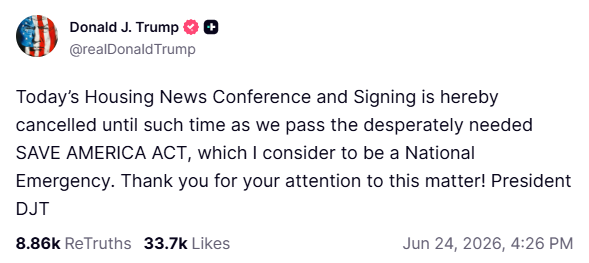
Trump said the signing would not happen until Congress passed the SAVE America Act, language he used in a Truth Social post cancelling the event, calling the act a national emergency.
He had made a similar threat earlier this year, warning he would block other legislation until that bill reached his desk. Until Wednesday, the housing bill's signing had not been part of that standoff.
The vote that already happened
The SAVE America Act does not need a new debate to know where it stands in the Senate. Republicans tried to attach its core provisions to a budget reconciliation package in early June, and the attempt failed 48 to 50, with four Republican senators, Susan Collins, Lisa Murkowski, Thom Tillis, and Mitch McConnell, joining every Democrat against it, according to a Senate floor report. Senate Majority Leader John Thune has said he does not expect to bring the bill back to the floor for the rest of the session.
What the standoff is costing
The CBDC ban does not need Trump's signature to take effect. A bill presented to the president becomes law automatically after ten days if Congress stays in session and he neither signs it nor vetoes it, and this one passed by margins large enough to survive a veto regardless. What the standoff actually spends is something neither bill can recover: Senate floor time, the resource behind the CLARITY Act's odds, which were already falling for unrelated reasons earlier this month.
| CLARITY Act Senate Floor 2026: Every Fight That Got It to Committee and the One That Decides What Comes Next
| CLARITY Act Senate vote: the police union switched sides
| Fairshake commits $30 million against Sherrod Brown after the CLARITY Act defeat
| Digital euro pilot: the ECB picked 36 payment firms before the law exists
What the ban actually protects
The ban is not a blanket restriction on digital dollars. It explicitly shields stablecoins that are open, permissionless, and private, an explicit stablecoin shield written into the bill's language weeks before this week's standoff, leaving the $315 billion private stablecoin market untouched regardless of when Trump signs.
Where the ban stands now
None of this changes what happens to the ban itself. Trump's own executive order from last year already barred federal agencies from building a CBDC, and the new Fed chair has publicly opposed the idea, so the statutory ban mostly confirms a policy nobody in Washington is currently fighting over. The fight that matters is happening one floor down, inside America's digital dollar ban, where a ten-day constitutional clock is now doing the work a signing ceremony was supposed to do.
Where the bigger story sits
Congressional gridlock over a single signature is a small story by itself. Inside financial technology more broadly, it is one more entry in a pattern that has defined 2026: legislation with broad bipartisan support getting stuck behind unrelated political fights rather than substantive disagreement over the policy itself.
Trump has already won the argument over central bank digital currency. The Senate, his own Senate, has already lost the argument over voter citizenship verification. Holding the first hostage to the second changes neither outcome. It only decides how much of the calendar the CLARITY Act has left to work with.
Editor's note
Every piece published on The Bright Minded goes through careful verification, but mistakes can happen. If you spot an error, have additional information, or want to flag anything, write to rosalia@thebrightminded.com.