
The FCA Just Told Premier League Clubs Their Badge Is Being Used to Sell Unauthorised Crypto
The FCA wrote to Premier League clubs on June 3 warning that unauthorised crypto firms are buying shirt space to reach fans who trust the badge over the product.
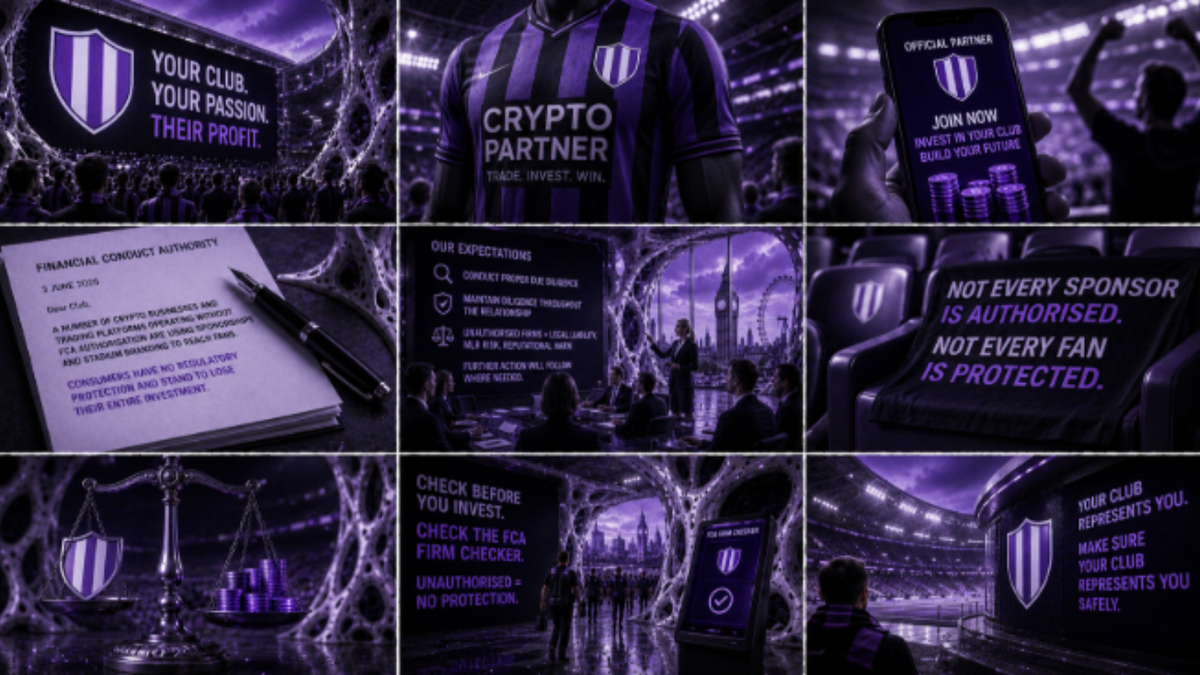
Millions of football fans trust their club's badge. Unauthorised crypto firms have been paying to borrow that trust. The UK's Financial Conduct Authority made the mechanism explicit on June 3, 2026, when it wrote directly to football clubs, mainly in the Premier League, warning that a number of crypto businesses and trading platforms operating without FCA authorisation are using shirt sponsorships and stadium branding to reach fans. Consumers dealing with these firms have no regulatory protection and stand to lose their entire investment.
The FCA's position is specific: providing financial services in the UK without authorisation may already constitute a breach of UK financial services law. A commercial sponsorship deal changes nothing about that legal status. Lucy Castledine, the FCA's director of consumer investments, stated that a logo on a shirt means one thing: that firm paid for it. FCA authorisation is a separate question entirely, and fans cannot read one from the other.
What the FCA expects from clubs
The FCA's letter to clubs carried clear expectations. Clubs must conduct proper due diligence on financial services sponsors before signing any deal, and maintain that diligence throughout the relationship. The FCA stated that commercial arrangements with unauthorised firms expose clubs to legal liability, money laundering risk, and reputational harm. Where specific concerns had already been identified, the FCA said it had contacted the relevant club. Further action, where needed, will follow.
The FCA is engaging with the government, the Premier League, and the Independent Football Regulator to address the issue across the sport rather than club by club. Sports Minister Stephanie Peacock added a statement welcoming the action, emphasising that fans deserve to know the companies associated with their clubs meet basic standards of accountability.
The promotion model the FCA identified
The FCA's letter names something specific about how unauthorised crypto promotion has worked in practice. Club association functions as a credibility signal. Fans encountering a brand on a shirt or around a stadium receive an implicit message about that brand's legitimacy, a message the club never intended to send and the regulator never approved. The fintech sector has seen banking-style rules applied to crypto in other enforcement contexts, but the sponsorship channel had remained outside that scrutiny until now.
UK law requires firms providing financial services to consumers to hold FCA authorisation, or have their marketing approved by an authorised firm, before promoting any financial product. That requirement covers crypto promotions. A shirt reaching millions of viewers does not create an exemption. The Wooller analysis of UK regulation identified how the UK's approach to emerging technology tends to lag behind the commercial activity it governs. The FCA's June 3 letter shows that lag closing, at least in this corner of the crypto market.
What fans need to know
The FCA's guidance to fans is straightforward. Prominence of branding, the reputation of the sponsoring club, and the polish of an app or website carry no regulatory weight. Before using any financial services firm encountered through a football sponsorship, fans should check the FCA's Firm Checker. Firms absent from that register carry no consumer protection. The FCA updates its Warning List of unauthorised firms regularly and has encouraged fans to use it before committing any money to a crypto product.
The FCA's June 3 letter is the first time the regulator has addressed the sponsorship channel directly, rather than warning consumers after the fact. Club trust has become infrastructure for crypto distribution in the UK, and the FCA has now told the clubs that the infrastructure is their responsibility.
Editor's note
Every piece published on The Bright Minded goes through careful verification, but mistakes can happen. If you spot an error, have additional information, or want to flag anything, write to rosalia@thebrightminded.com.