The CFTC Closes Its Celsius Case Against Alexander Mashinsky With a Permanent Ban
The CFTC permanently banned Alexander Mashinsky on June 18, 2026. The Celsius case shows how crypto yield platforms used the word "safe" without legal weight.
The Bright Recap
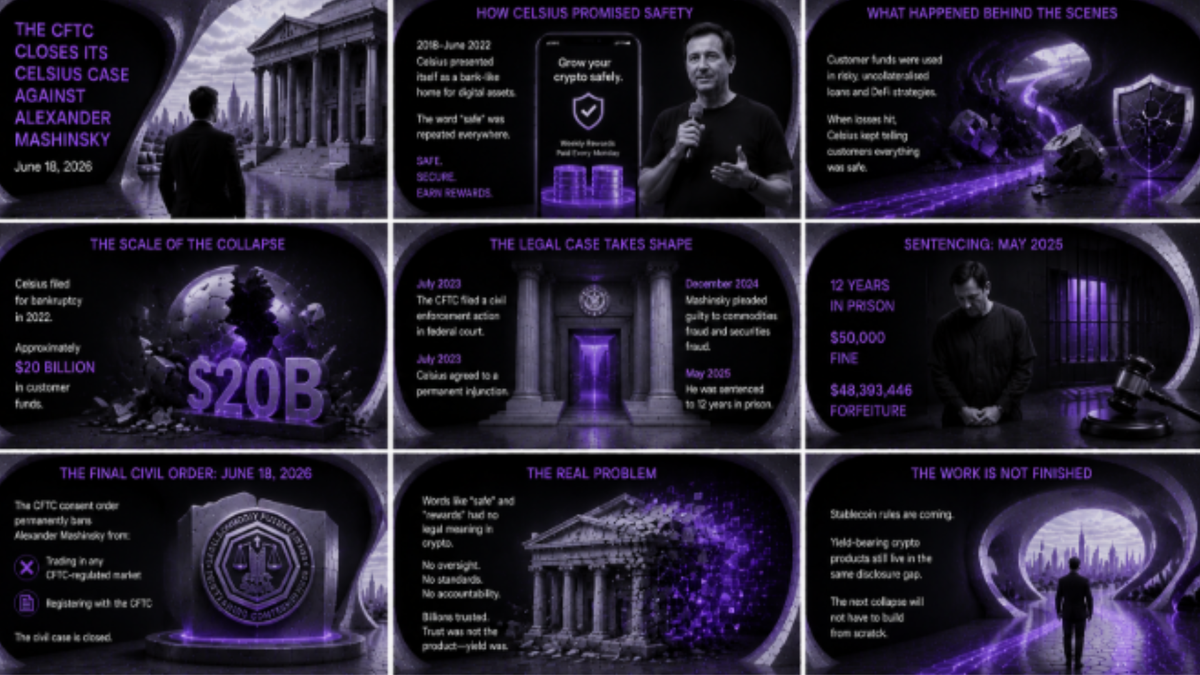
The CFTC resolved its enforcement action against Alexander Mashinsky on June 18, 2026, permanently banning the Celsius Network founder from trading and registration. Celsius raised approximately $20 billion from customers by presenting itself as a safe, bank-like platform for digital assets while running strategies that destroyed those funds.
To know more about this topic, read our related articles:
The CFTC consent order entered on June 18, 2026 permanently bans Alexander Mashinsky, founder of Celsius Network, from trading and registration in CFTC-regulated markets, closing the civil enforcement action the regulator filed in July 2023. Mashinsky was sentenced to 12 years in prison in May 2025 after pleading guilty in December 2024 to commodities fraud and securities fraud. The consent order is the final legal chapter of a case that began with a simple question: how did a crypto yield platform accumulate approximately $20 billion in customer funds by calling itself safe?
How Celsius built $20 billion on one word
Between 2018 and at least June 2022, Celsius presented itself to customers as a bank-like alternative for digital assets. Weekly interest payments were rebranded as rewards. The platform described customer funds as safe, a term Mashinsky repeated across videos, blog posts, and social media over four years. In traditional finance, "safe" carries a legal meaning attached to disclosure obligations, capital requirements, and regulatory oversight. Celsius carried none of those obligations. The word cost the platform nothing to use and gave customers no mechanism to verify whether the claim reflected reality.
To sustain the yields it promised, Celsius deployed customer funds in uncollateralised loans and high-risk decentralised finance agreements. When those positions generated losses, customer-facing communications continued to describe the platform as safe and profitable. Celsius filed for bankruptcy in 2022. Total customer funds at the time of collapse stood at approximately $20 billion.
What the legal proceedings established
The Commodity Futures Trading Commission (CFTC) filed its complaint against Celsius and Mashinsky in the US District Court for the Southern District of New York in July 2023. A consent order of permanent injunction against Celsius followed that same month, leaving Mashinsky as the sole remaining defendant.
The parallel criminal action, filed by the US Attorney's Office for the Southern District of New York in July 2023, produced Mashinsky's December 2024 guilty plea and his May 2025 sentencing: 12 years in prison, a $50,000 fine, and forfeiture of $48,393,446. Today's consent order closes the civil file with permanent trading and registration bans.
The structural problem the order cannot name
The Celsius case sits inside a broader pattern that the CFTC's crypto enforcement record reflects clearly: yield-bearing crypto platforms have operated for years in a space where the vocabulary of banking carried no corresponding legal obligations. "Safe," "rewards," and "deposits" are precise terms in regulated finance. Applied to crypto yield products, they have functioned as marketing language with no enforceable standard behind them.
That gap is what made Celsius possible at scale. Among the communities where crypto platforms have seen deepest adoption, the appeal of a safe, yield-bearing alternative to traditional banking was strongest precisely where financial alternatives were scarcest. The GENIUS Act addresses stablecoin issuance. Yield-bearing crypto products remain in the same disclosure gap that Celsius occupied for four years.
Celsius raised $20 billion on a word that carried no legal weight. The consent order bans one man. The vocabulary that enabled him remains unregulated across fintech platforms operating today.
Editor's note
Every piece published on The Bright Minded goes through careful verification, but mistakes can happen. If you spot an error, have additional information, or want to flag anything, write to rosalia@thebrightminded.com.