
SpaceX Tokenized IPO: How Bybit and Kraken Are Giving Crypto Users the Offering Price
Bybit and Kraken are the first crypto exchanges to offer SpaceX shares at the IPO price via blockchain tokenization. Here is how it works and what pro-rata allocation means.
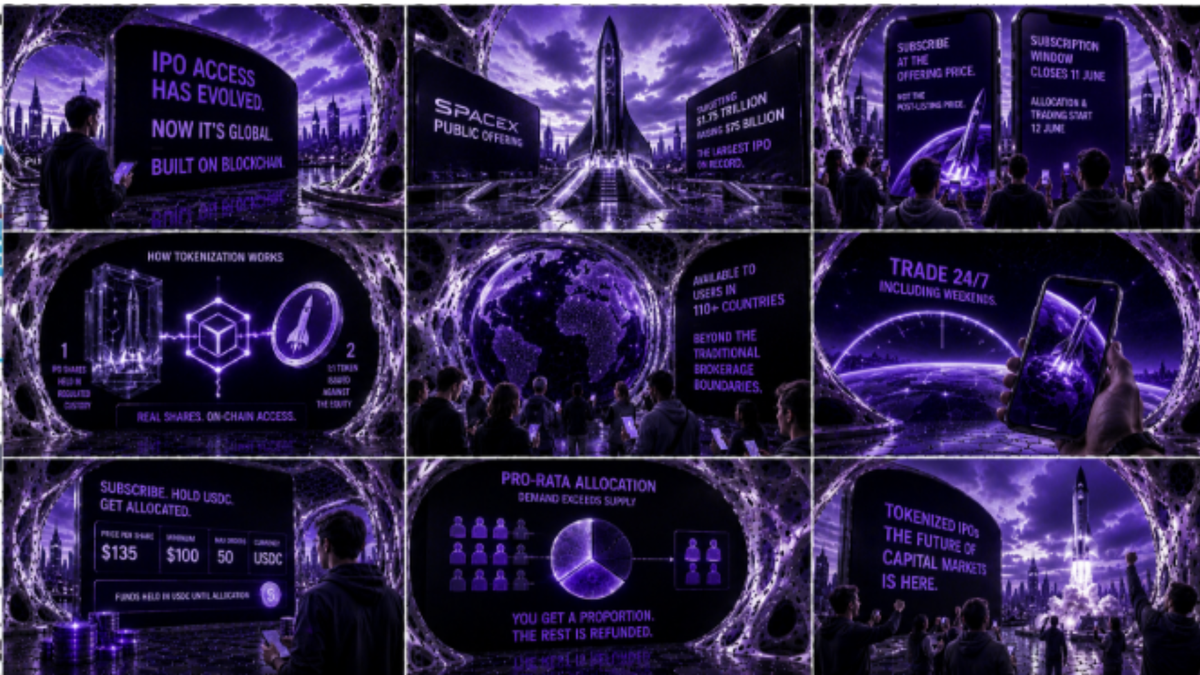
Retail investors have been able to access IPOs through regulated brokers and fintech platforms for years. Robinhood built IPO Access in the United States. eToro is participating in the SpaceX offering for UK users through the Financial Conduct Authority's Public Offer Platform. The access was already there. What Bybit and Kraken have done differently is deliver it through crypto exchange infrastructure, using blockchain tokenization to settle the transaction — and in doing so, they have extended that access to users in more than 110 countries who have neither a traditional brokerage relationship nor access to a regulated retail offer in their jurisdiction.
Kraken opened subscriptions on 5 June 2026 through its xStocks platform. Bybit followed on 7 June with IPO Express. Both are among the first centralized crypto exchanges to offer subscription at the IPO offering price rather than the post-listing market price. The subscription window closes 11 June, with token allocation and spot trading beginning 12 June — the expected Nasdaq listing date for SpaceX. The offering targets a valuation of at least $1.75 trillion and seeks to raise $75 billion, which would be the largest public offering on record.
How the tokenization works
Both platforms run on xStocks, a tokenized equities infrastructure acquired by Kraken's parent company Payward through its purchase of Backed Finance in late 2025. The framework operates across Ethereum, Solana, and TON. On the day of listing, IPO shares are purchased and held in regulated broker-dealer custody. A token is then issued 1:1 against that underlying equity, giving the holder direct economic exposure to SpaceX's share price. The tokens trade 24 hours a day, seven days a week, including the weekend after listing when conventional markets are closed.
On Bybit, the product is available to users who have completed Level 1 identity verification and hold VIP or Pro status. The indicative subscription price is $135 per share, with a minimum commitment of $100 and a cap of 50 subscription orders per user. Committed funds are held in USDC until allocation is finalized. The offering is unavailable to users in the United States, United Kingdom, Canada, and Australia due to regulatory requirements in those jurisdictions — UK users have their own route through eToro and the FCA's retail offer framework.
Pro-rata allocation, explained without the jargon
An IPO has a fixed number of shares. When more investors want to participate than there are shares available, each subscriber receives a proportion of what they requested rather than the full amount. That proportion is calculated based on their share of total demand — which is what pro-rata means.
SpaceX has attracted approximately $150 billion in investor demand against the $75 billion it is seeking to raise. That is roughly two times oversubscribed before crypto exchange participation is factored in. If a user on Bybit commits $1,350 to subscribe to ten shares and total demand across the platform is five times the available allocation, that user receives approximately two shares. The remaining $1,080 is returned automatically after allocation is finalized between 11 and 12 June.
This is standard IPO mechanics, identical to how institutional allocation works.
Where this sits in the broader picture
The convergence of blockchain and capital markets has moved faster in 2026 than most traditional institutions expected. Tokenized real-world assets — equities, bonds, and instruments like stablecoins — are the area where crypto-native infrastructure and institutional finance are actively overlapping. The stablecoin settlement data Revolut published earlier this month was one data point in that same direction.
The SpaceX tokenized IPO is a more visible and higher-stakes test of the same underlying thesis: that blockchain rails can handle the plumbing of mainstream capital markets at scale.
Editor's note
Every piece published on The Bright Minded goes through careful verification, but mistakes can happen. If you spot an error, have additional information, or want to flag anything, write to rosalia@thebrightminded.com.