Musk v. OpenAI Verdict: What a Jury Settled in Under Two Hours and What It Could Not Touch
A federal jury dismissed Elon Musk's case against OpenAI in under two hours on May 18. Here is what the verdict decided and what it could not address on the merits.
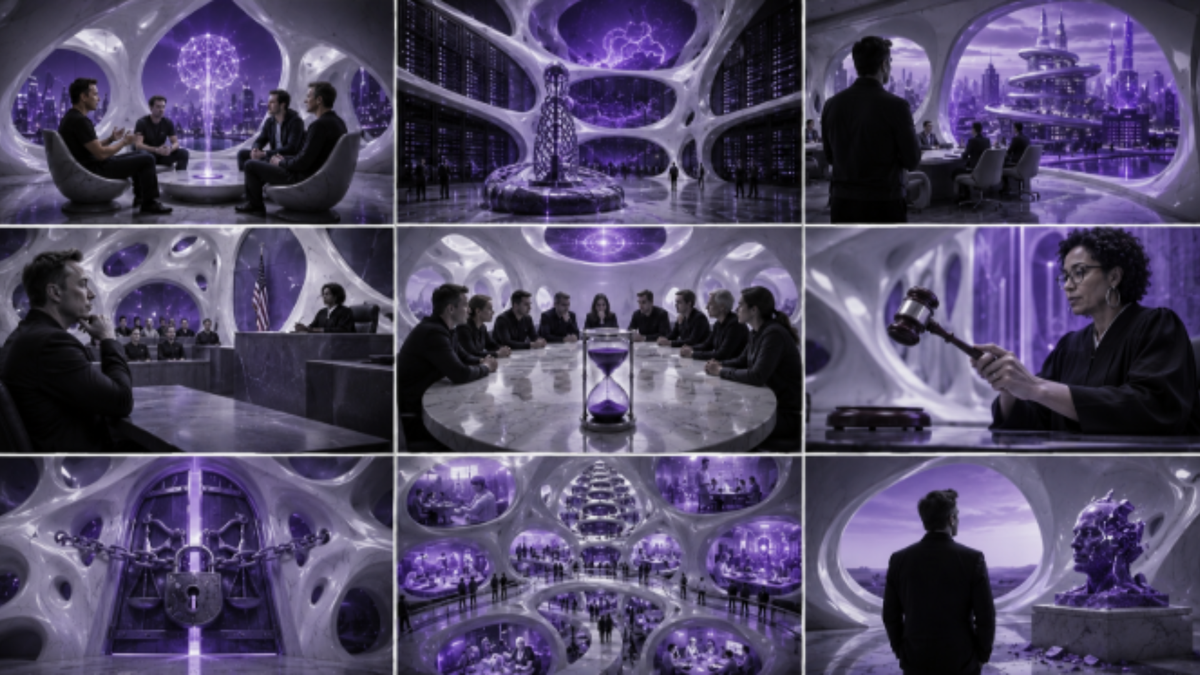
OpenAI was founded in 2015 as a nonprofit with a specific mission: to develop artificial general intelligence for the benefit of humanity, with no single person or company owning the outcome.
It is now valued at $852 billion, structured as a hybrid for-profit entity, embedded in fintech, healthcare, and enterprise software markets, and moving toward one of the largest IPOs in American history. The question of whether that transformation was lawful came before a federal jury in Oakland, California on April 27, 2026. On May 18, nine jurors answered it in under two hours by not answering it at all.
What the jury actually decided
The unanimous verdict rested entirely on the statute of limitations. Jurors found that Musk knew, or should have known, about OpenAI's transition toward a for-profit structure years before he filed his lawsuit in February 2024, and that delay made his claims legally time-barred.
Judge Yvonne Gonzalez Rogers, who had indicated during the trial she was prepared to dismiss the case on her own, adopted the advisory verdict as her own ruling. She said the evidence supporting the jury's timing finding was substantial.
The underlying question, whether OpenAI's conversion from nonprofit to hybrid for-profit constituted a breach of the charitable trust its founders established, was never adjudicated.
Three weeks of testimony about private text messages, competing accounts of founding promises, and the internal governance of one of the world's most consequential technology organizations produced a verdict on timing, not on whether those promises were made or broken.
What the trial revealed about how OpenAI came to be
The evidence the trial surfaced was consequential regardless of the outcome. Internal communications showed that Musk, Altman, Brockman, and Ilya Sutskever began debating corporate structures as early as 2017, when it became clear that developing competitive AI systems required billions in computing resources a pure nonprofit could not raise. Musk pressed for control of the for-profit entity the group was considering.
The other co-founders resisted, and Altman testified that they had concluded no single person should control the development of AGI. Musk left the board in February 2018, and Altman told the court the departure lifted morale among employees who had found Musk's management approach difficult.
OpenAI's legal team argued throughout that Musk had been aware of and at times supportive of the structural changes he later characterized as betrayal. Text messages introduced in evidence showed Musk being kept informed of company decisions by then-board member Shivon Zilis after his departure.
Musk's 2023 launch of xAI, his documented attempts to recruit OpenAI staff, and what Altman described as active business interference formed the core of OpenAI's counter-argument: that the lawsuit was designed to damage a competitor, not protect a charity.
What OpenAI keeps
The verdict preserves OpenAI's current structure intact. Musk had sought between $78.8 billion and $135 billion paid to OpenAI's nonprofit arm, the removal of Altman and Brockman, and an unwinding of the for-profit restructuring. None of those outcomes is in play.
Microsoft, which Musk had sued for aiding and abetting the alleged breach of charitable trust, was cleared on the same grounds. The verdict removes the most significant legal obstacle ahead of OpenAI's expected IPO.
Musk's lead attorney Marc Toberoff said the verdict would be appealed. The judge's language makes that path difficult: she described the evidentiary basis for the jury's timing finding as substantial and said she had been ready to dismiss before the verdict was delivered.
The question the verdict could not resolve
The governance of AI, who controls it, who benefits from it, and who is accountable when founding commitments change, is one of the defining questions of this period in the technology's development. The Musk trial was the most prominent legal attempt to subject that question to judicial scrutiny, and a jury decided the attempt came too late.
The question of whether a nonprofit built explicitly for humanity's benefit can be converted into an $852 billion private company without legal accountability to the public it was built to serve has now been argued at length in a federal court and remains unanswered on the merits.
Musk co-founded OpenAI on a specific conviction: that concentrated control of AGI was a civilizational risk requiring a dedicated nonprofit counterweight - but it's worth saying that he's building xAI.
The company he helped create, which he left after failing to gain control of it himself, is now the most valuable private AI organization in the world. The jury decided he raised that objection too late. Whether the objection was correct was not part of the verdict.
Editor's note
Every piece published on The Bright Minded goes through careful verification, but mistakes can happen. If you spot an error, have additional information, or want to flag anything, write to rosalia@thebrightminded.com.