Identity Fraud Set a Record and Traded Up: From Gift Cards to Home Equity
Identity theft hit a record share of financial applications in early 2026, even as the rate eased, while fraud rings moved from gift cards to home equity.
The Bright Recap
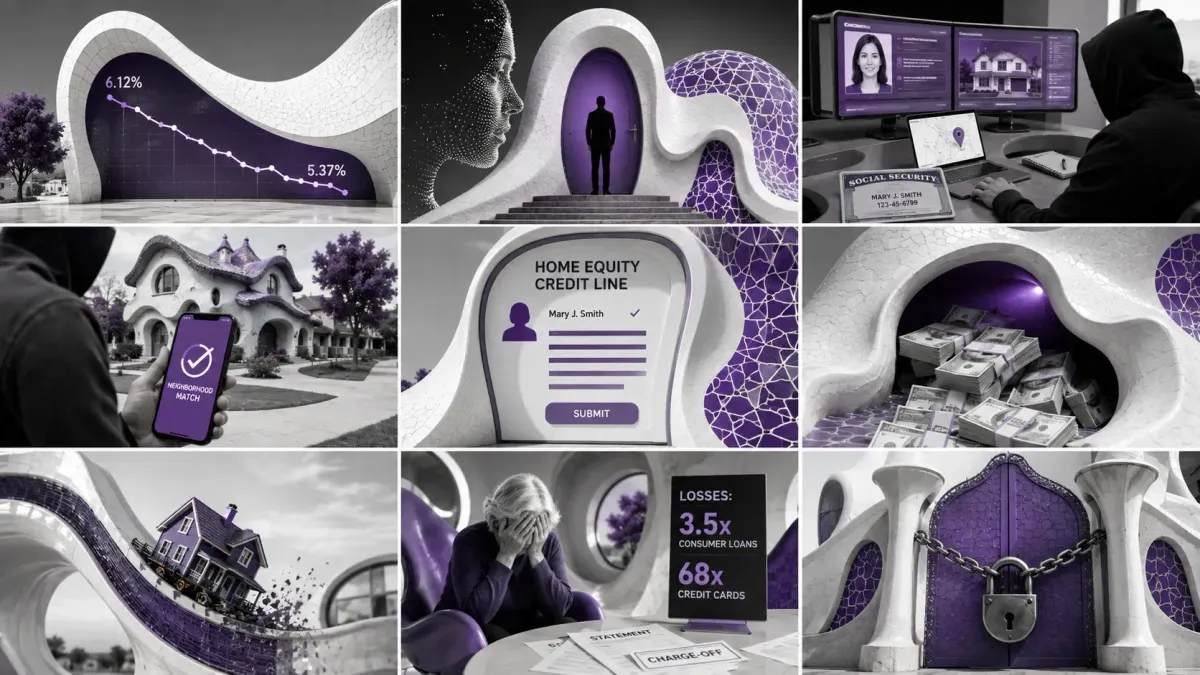
One in every 16 financial applications carried an attempt at identity theft in the first half of 2026, a record, even as the rate eased from its winter peak to 5.37% by late spring. SentiLink's latest report reads over 170 million applications from banks, lenders and telecoms.
The bigger change is in the targets. Fraud rings have moved from gift-card scams to opening home-equity credit lines and draining retirement accounts, disguising each application to look like a real local person. The measure counts attempts caught in real time, not money lost.
To know more about this topic, read our related articles:
- Why firms must know their real customers
- How AI names became phishing bait
- Financial technology explained
Bright Answers
Does a 6.12% identity-theft rate mean 6% of applications lose money to fraud?
No. The figure counts applications flagged as likely identity theft as they arrive, not fraud that succeeds. SentiLink scores applications in real time and blocks high-risk ones, so the rate measures attempts rather than losses.
What has changed about identity fraud in 2026?
The targets. Rings have moved from low-value gift-card scams to opening home-equity credit lines and pushing older victims to cash out retirement savings, while making each application look like a genuine local applicant.
Identity theft showed up in a record 6.12% of financial applications during the first half of 2026, about one in every 16, according to a new report from the fraud-detection firm SentiLink. The rate fell across the period, from a winter peak to 5.37% by May and June, and it never once dropped below 5%. The sharper change is in who the fraud now targets. Rings are spending less effort on the impulsive shopper and more on the homeowner with equity to borrow against.
Cantica's Purgatorio flagged the identity theft story as "Bad" for its repercussions on people. Discover more about how The Bright Minded uses Cantica, the Fin-Tech intelligence system for bespoke intelligence reports and original data.
Identity is the gate to credit
An application for a loan or an account is, at bottom, a claim about who you are. The lender's defence is to decide whether that claim is real before money moves, which is why so much of finance now turns on knowing the real customer. SentiLink sits at that point, reading over 170 million applications from banks, lenders and telecoms as they come in. Its figures track attempts its systems flag, not losses that get through, so a number falling can mean the defence is working rather than the danger easing.
From gift cards to home equity
The report describes rings that have climbed the value chain. Their old work ended in a stolen gift card; their new work opens home-equity credit lines in a homeowner's name and steers older victims into cashing out retirement savings. The target stopped being the person with little to lose and became the person with the most to take.
Built to look like a neighbour
Reaching those assets means getting past the identity check, and the rings have invested in looking legitimate. They now borrow the victim's own surroundings, sending an application through a device in the victim's neighbourhood so it carries the digital signals of a real resident. That is the very thing a fraud filter is trained to trust. The same instinct runs through other recent attempts that look legitimate, where the disguise, not the volume, is the point.
The bill arrives in the tail
A percentage cannot show where the damage lands, because the losses cluster in the few cases that slip through. SentiLink puts fraud-related charge-offs at 3.5 times the norm in consumer lending and 68 times the norm on credit cards. That gap explains why financial technology (fintech) now spends so heavily on verifying identity, since one missed application can cost more than hundreds of clean ones earn. Synthetic identities stayed broadly flat at 0.64%, while first-party fraud, the applicant lying about their own intent, averaged 2.00% and ran highest in car loans and telecoms.
Identity fraud has stopped hunting the impulsive and started hunting the propertied.
Editor's note
Every piece published on The Bright Minded goes through careful verification, but mistakes can happen. If you spot an error, have additional information, or want to flag anything, write to rosalia@thebrightminded.com.